

RCF Lite
RCF Lite
RCF Lite applies the Requirements Confidence Framework to coding-agent projects. It links requirements, tests and code so you can check coverage and identify what needs re-checking after a change.
Product intent stored only in prompt history makes it difficult to check coverage, tests or the effects of a change. RCF Lite keeps a machine-checkable chain from what you asked for through requirements, user stories, acceptance criteria and tests to the code itself.
rcf-lite provides one npm package, plain JSON files in your repository and an MCP server your agent uses. Your agent authors and maintains the chain. You configure the initial wiring once per repository, but guidance updates may require rcf init or rcf doctor --fix to refresh it. You then answer questions and review the work.
Node.js 24 or newer is required. On an older Node version, installation fails before the package files land. Run node -v before npm install.
Start here: wire your agent See it work in ten minutes Understand the method first
How you and your agent judge the tree together
The tool checks structure. rcf define validate proves every document matches its schema and every reference resolves. rcf audit coverage counts a test case only when its pointer resolves to a real test. You and your agent judge whether the tree captures what you want built during the review offered before the first build, the review stage of each build item and periodic fresh-context app reviews:
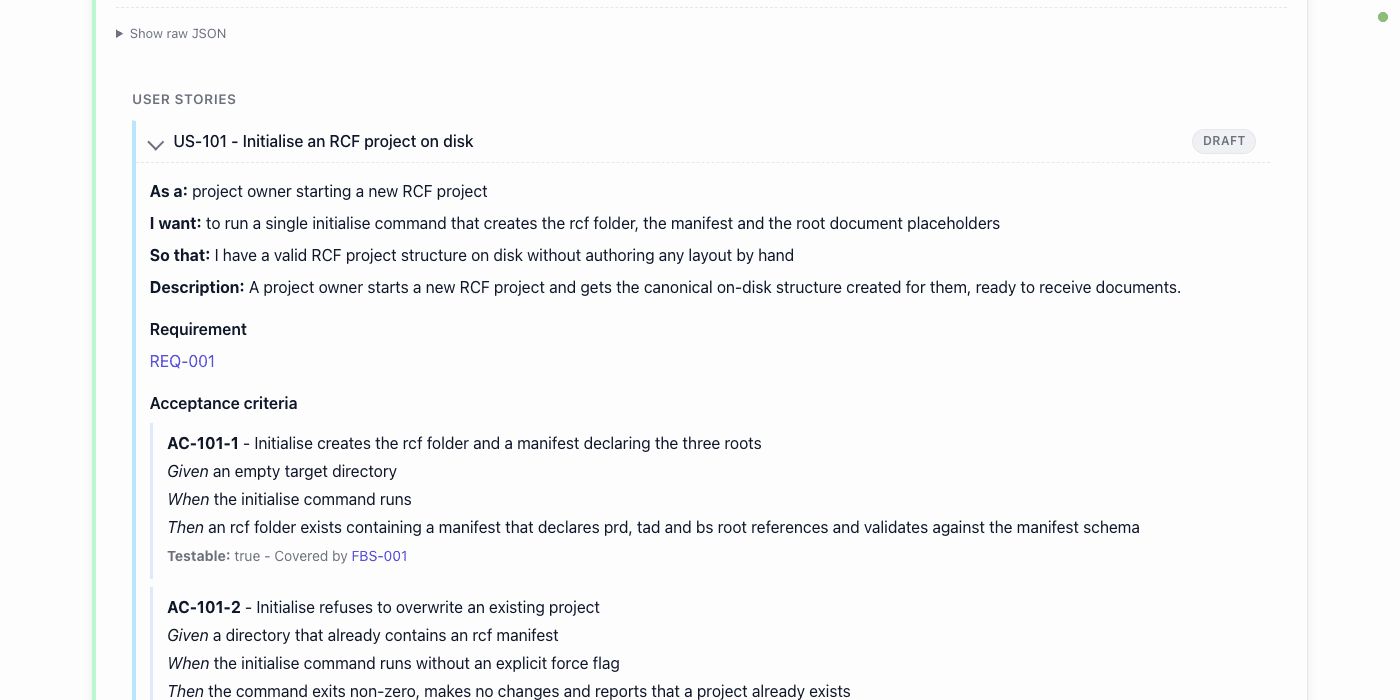
- The docs-review gate, once, before the first build. Your agent offers to walk you through the chain of requirements it drew from your conversation, then waits for your answer. If you accept, you open the tree in the viewer, read what the agent captured against what you meant, and push back on what is missing. Reviewing the tree covers how.
- The review stage of each build cycle, once per build item. Before an item is marked complete, your agent rereads the diff against each acceptance criterion and runs the test-theatre and mutation-sampling audit.
- The fresh-context app review, every few build items and once more at the end. The reviewer drives the running app against its acceptance criteria and uses the product rather than reading the code.
The tool establishes that the tree is well formed. You and your agent establish that it describes the right product. Both checks are required.